Global Alarm as Ebola Outbreak Escalates in Democratic Republic of Congo
The Democratic Republic of Congo is grappling with a burgeoning Ebola outbreak, reporting nearly 500 suspected cases and 116 deaths, prompting the World Health Organization to declare a public health emergency. The outbreak, fueled by the Bundibugyo species of Ebola virus, poses a significant threat, spreading into neighboring Uganda and affecting international personnel.
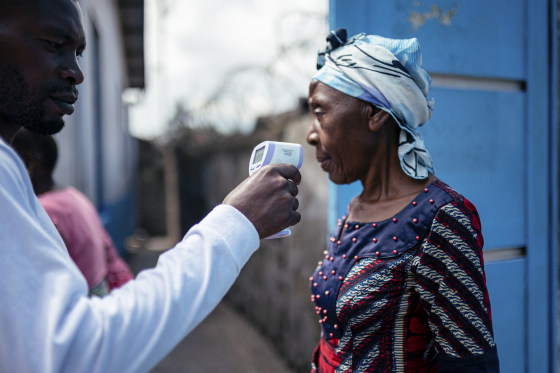
A hospital worker in Goma, DRC checks a visitor’s temperature as a precaution against the ongoing Ebola outbreak. _Photo by Jospin Mwisha / AFP via Getty Images_
The Democratic Republic of Congo (DRC) is currently battling a severe Ebola outbreak, with nearly 500 suspected cases and 116 reported deaths as of Monday, according to the United Nations. Highlighting the seriousness of the situation, the World Health Organization (WHO) has declared it a public health emergency of international concern, especially as the virus crosses borders into Uganda.
Among the affected is an American citizen who contracted the virus while working in the DRC. The individual, along with six other Americans, will be transported to Germany for monitoring and treatment by the Centers for Disease Control and Prevention (CDC), as confirmed on Monday. This move underscores the critical global implications of the outbreak.
**Understanding the Bundibugyo Ebola Virus**
The current crisis in the DRC is driven by the less common Bundibugyo strain of the Ebola virus. According to the CDC, Bundibugyo is one of four Ebola virus species known to afflict humans and has only been linked to a handful of outbreaks since its discovery in western Uganda less than two decades ago. Experts suspect that fruit bats are natural carriers of the virus.
**Transmission and Symptoms**
The Bundibugyo virus spreads similarly to other Ebola types, through direct contact with blood, bodily fluids, and contaminated environments. It poses significant risks during the handling of deceased bodies.
Symptoms of infection start with fever, headache, sore throat, fatigue, and muscle pain, progressing to severe gastrointestinal issues and hemorrhagic symptoms as the virus disrupts the vascular system. The incubation period can extend up to 21 days.
**Mortality and Prevention Efforts**
Dr. Geeta Sood, an epidemiologist at Johns Hopkins Bayview Medical Center, estimates the Bundibugyo mortality rate to be between 25% and 40%. This is lower than the Zaire species of Ebola, which can have a death rate as high as 90% but remains nonetheless alarming.
In terms of prevention, current vaccines by Johnson & Johnson and Merck target the more prevalent Zaire strain and are ineffective against Bundibugyo. Experimental vaccines, including a promising mRNA-based one under development in China, have yet to proceed beyond pre-clinical trials.
**Global Readiness and Response**
While there are no direct cases in the U.S., the CDC's Dr. Satish Pillai assures the threat to Americans remains minimal. However, history reminds us of the 2014 West African outbreak that attracted global attention and intervention.
Supportive care remains the cornerstone of treatment, emphasizing the need for hydration and vital organ support, underscoring a global health system's readiness to manage severe Ebola infections.
Authorities continue to evaluate other therapeutic avenues, including monoclonal antibodies, with the hope of developing targeted interventions soon.
Reviewed by Ebola.ai Data Integrity Desk
This dispatch was programmatically verified against dynamic, corroborated primary intelligence signals and curated by our specialized computational epidemiology infrastructure to eliminate hallucination vectors before distribution.