Global Health Alert: Ebola Outbreak in DRC Declared International Emergency
The World Health Organization has declared a Public Health Emergency of International Concern due to a new Ebola outbreak in the Democratic Republic of the Congo. With hundreds of cases and rising deaths, the outbreak has already reached Uganda, and an American doctor has been evacuated to Europe for treatment.
# Global Health Alert: Ebola Outbreak in DRC Declared International Emergency
On 16 May 2026, the World Health Organization (WHO) declared the ongoing Ebola outbreak in the Democratic Republic of the Congo (DRC) a **Public Health Emergency of International Concern (PHEIC)**. This decision marks only the eighth such declaration since the International Health Regulations were revised in 2005.
Current Situation:
A Bundibugyo virus-induced outbreak has emerged in eastern DRC’s Ituri Province, with over **500 suspected cases and 131 deaths** reported by 19 May 2026. The virus also crossed borders to Uganda, confirming **12 cases**. An American missionary doctor, **Peter Stafford**, who contracted the virus in DRC, was airlifted to Berlin’s Charité hospital for treatment, marking the first Ebola medical evacuation to Europe in this outbreak.
Key Points:
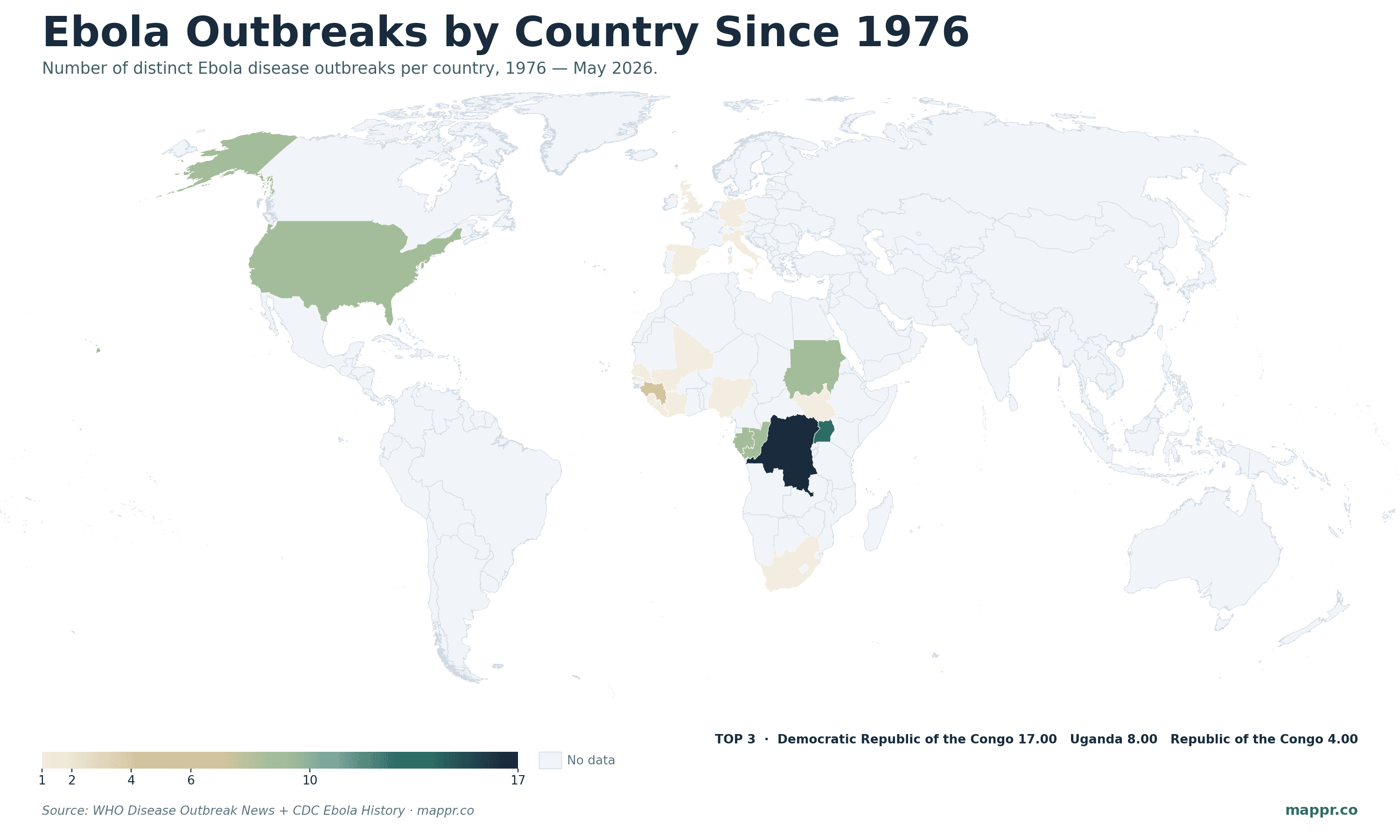
- **DRC’s 17th Outbreak:** Since 1976, the DRC has experienced 17 separate Ebola outbreaks, the highest number of any country.
- **Cross-border Spread:** Ugandan authorities confirmed 12 cases following an initial death in Kampala. Enhanced screening and entry restrictions are in place for travelers from affected regions.
- **No Licensed Vaccine:** Existing vaccines target the Zaire strain, leaving limited options for Bundibugyo virus treatment. Containment relies on traditional outbreak control methods.
- **Global Vigilance:** Enhanced monitoring and preventive measures are being implemented globally, particularly for travelers from DRC and Uganda.
Origins and Spread:
The outbreak's epicenter is **Mongbwalu Health Zone in Ituri Province**, known for high-traffic mining activities. Proximity to Uganda and South Sudan, coupled with regional insecurity, has facilitated the cross-border spread.
Epidemiological Timeline:
- **24 April 2026:** The index case emerges in Bunia.
- **5 May 2026:** Alert of a high-mortality illness in Mongbwalu reaches WHO.
- **13 May 2026:** Initial negative test results for Ebola lead to further PCR testing.
- **15 May 2026:** Official confirmation of Bundibugyo virus by genomic sequencing.
- **19 May 2026:** Major increase in confirmed and suspected cases.
The Global Response:
Strategies include bolstered entry restrictions, meticulous contact tracing, and healthcare personnel mobilization. The WHO stresses the importance of international health workforce collaboration in managing and containing this outbreak effectively.
Understanding Bundibugyo Virus:
**Bundibugyo virus (BDBV)**, one of the six known Ebola viruses, was first identified in Uganda in 2007. With a fatality rate of 30-40%, it poses significant health challenges without specific vaccines or targeted treatments available.
Conclusion:
The WHO’s emergency declaration underscores the urgency of containing the outbreak to prevent a global health crisis. As the situation develops, international support and coordinated response efforts remain crucial.
Reviewed by Ebola.ai Data Integrity Desk
This dispatch was programmatically verified against dynamic, corroborated primary intelligence signals and curated by our specialized computational epidemiology infrastructure to eliminate hallucination vectors before distribution.